
Integumentary System
The integumentary system is the largest organ system in the body. This is the first line of defense as well as a key regulator of temperature and health. Hair, skin, nails, and more are all part of the integumentary system working together to allow sensory perception and protect the rest of the organs.

Hair
Hair comes from hair follicles located in the dermis of the skin. Keratin is the main component of hair strands as they extend from a bulb in the follicle. Adding insulation as well as UV ray protection are just two of the main components of hair function. Other functions include:
-
Aesthetic
-
Sensory functions
-
Regulating temperature
-
Protection from dust (nose hairs), sweat (eyelashes), and UV radiation (head hair)
Hair grows in phases. Starting at the anagen phase hair follicles divide and hair extends. About 90% of your scalp is in the anagen phase. Hair grows around 1 cm a month. The next phase is the catagen phase which lasts around 2-3 weeks. Hair growth stops at this phase because the hair follicle shrinks. Finally, in the telogen phase (3-4 months) hair begins to rest and eventually falls out. It is normal to shed around 50-100 hairs per day.

Glands
Sweat glands produce and secrete sweat to regulate body temperature and excrete waste.
The types of sweat glands are:
Eccrine sweat glands:
-
Found all over the body
-
In palms, forehead, and underarms
-
Sweat produced primarily contains salt, water, and electrolytes
Apocrine sweat glands:
-
Found in hair follicles
-
Armpits, groin, nipples
-
Stimulated during stress as well
-
When in contact with bacteria they produce an odor
Sebaceous glands:
Secrete sebum, an oily substance that lubricates and protects the skin and hair. This maintains hydration and protects the skin from environmental damage. These can be found in everyone except the palms and soles of our hands and feet. They typically secrete the sebum through hair follicles.

Nails
Nails just like hair are composed of keratin. Their functions include protecting sensitive fingertips, aid in leverage and precision, and aesthetics.
Nails are composed of:
-
Nail plate (hard, visible portion of the nail)
-
Nail bed (skin beneath the nail plate)
-
Cuticle (thin layer of skin where nail meets skin)
-
Lanula (White crescent shape of nail at the base)
-
Nail matrix (below cuticle and produces new nail cells)

Sensory Receptors
Sensory receptors can be found in skin and other tissue to send signals to the brain. Allows us to perceive touch, pain, temperature, and more.
The main types of sensory receptors:
Mechanoreceptors:
Respond to touch, pressure, and vibrations
Thermoreceptors:
Two forms cold and hot to respond to changes in temperature
Photoreceptors:
Located in eye to respond to light and allow vision
Nociceptors:
Respond to pain such as tissue damage, extreme temperature, and pressure

Skin
The skin is composed of multiple layers:
Epidermis is the outermost layer composed of various cells such as keratinocytes, melanocytes, and Langerhans cells. These protect the body from pathogens as well as water loss. In addition, they produce melanin to give the skin color and protect the body from UV radiation.
The dermis is found underneath the epidermis. The collagens and elastin fibers provide strength and elasticity. Blood vessels can also be found in the dermis to supply nutrients to the skin. Hair follicles, glands, and nerve endings extend into the dermis.
The hypodermis is the innermost layer. It stores energy through fat and connective tissue. In addition, it absorbs shock and insulates the body.



Integumentary Diseases:
Acne:
Acne comes from the overproduction of sebum from sebaceous glands. This typically happens during puberty or pregnancy due to hormonal changes.
-
Common treatments include benzoyl peroxide or salicylic acid.
Eczema:
Eczema is a chronic inflammatory skin condition. This is triggered by allergens and irritants. Dry and cracked skin can occur if eczema is very severe.
-
Treatments include moisturizers and antihistamines to reduce itching and inflammation.
Skin cancer:
Skin cancer is the abnormal proliferation of skin cells resulting in bumps, sores, or moles. This is usually due to UV radiation.
-
Common treatments include surgical removals or cryotherapy.
Contact Dermatitis:
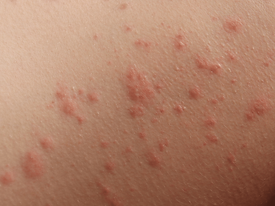
Contact dermatitis results in red, inflamed skin and blisters. This comes from poison ivy, detergents, cosmetics, or other allergen related factors.
-
Treatments include antihistamines and avoiding the allergen.
Vitiligo:
Vitiligo is an autoimmune disease. The body’s immune cells attack the melanocytes that produce pigment producing skin molecules. This results in depigmentation of skin.
-
Phototherapy and corticosteroids can repigment skin cells.
Hair loss:
Hair loss or alopecia is a common condition where hair begins to shed or thin off the scalp. This is mostly due to genetics, but stress and lack of nutrition can result in hair loss as well.
-
Some treatments include minoxidil, wigs, or surgery
Dandruff:
Seborrheic Dermatitis or dandruff is the flaking of the scalp. It can be due to excess sebum being produced or dry skin.
-
Medicated shampoo, lotion, or lifestyle change are common treatments.


Nutrition
Healthy Hair:
Protein:
Hair is made of keratin which comes from protein
-
Sources: lean meats, nuts, seeds, plant based proteins
Biotin:
Crucial for keratin production and promoting healthy hair growth
-
Sources: eggs, almonds, and sweet potatoes
Zinc:
Maintains oil glands in hair and essential for growth and repair
-
Sources: lentils, chickpeas, beef
Iron:
Prevents hair thinning and loss
-
Sources: red meat, spinach, and lentils
Vitamin C:
Protects hair follicles from damage
-
Sources: citrus foods, tomatoes, and bell peppers
Vitamin A:
Regulates production of sebum
-
Sources: carrots, sweet potatoes, spinach, and kale
Omega-3 fatty acids:
Keep scalp hydrated and protect from dandruff
-
Sources: fatty fish, chia seeds, flaxseeds, and walnuts
Healthy Skin:
Vitamin C:
Essential for collagen production
-
Sources: citrus foods, tomatoes, and bell peppers
Vitamin E:
Protects from UV damage, free radicals, and pollution
-
Sources: almonds, sunflower seeds, spinach, avocado, sweet potatoes
Vitamin A:
Skin cell production and repair
-
Sources: carrots, sweet potatoes, and spinach
Omega-3 fatty acids:
Reduce inflammation, keep skin hydrated, and improve function of skin barrier
-
Sources: fatty fish, chia seeds, flaxseeds, and walnuts
Water:
Prevents dryness and essential for elasticity
Collagen:
Strength and elasticity in skin
-
Sources: chicken skin, bone broth, supplements
Selenium:
Protects skin from UV damage
-
Sources: Brazil nuts, sunflower seeds, brown rice
Sources:
-
Assaf, S. “Nutritional Dermatology: Optimizing Dietary Choices for Skin Health.” Nutrients, vol. 17, no. 1, 2024, MDPI, www.mdpi.com/2072-6643/17/1/60.
-
Linus Pauling Institute. “Skin Health.” Micronutrient Information Center, Oregon State University, 2016, lpi.oregonstate.edu/mic/health-disease/skin-health.
-
“Dietary Influences on Skin Health in Common ….” Journal of Clinical and Aesthetic Dermatology, 2024, PubMed Central, pmc.ncbi.nlm.nih.gov/articles/PMC10982215/.
-
Integris Health. “The Role of Nutrition in Skin Health.” On Your Health, 15 Dec. 2023, integrishealth.org/resources/on-your-health/2023/december/the-role-of-nutrition-in-skin-health.
-
Metro Polis Dermatology. “The Impact of Diet on Skin Health: Insights from Dermatologists.” Metropolis Dermatology, 30 Sept. 2024, metropolisdermatology.com/the-impact-of-diet-on-skin-health-insights-from-dermatologists/.
-
Weber, Jon. “12 Foods Scientifically Proven to Boost Skin Health.” Medical News Today, 5 Sept. 2018, www.medicalnewstoday.com/articles/322986.
-
Healthline Editors. “The 11 Best Foods for Healthy Skin.” Healthline, 2019, www.healthline.com/nutrition/12-foods-for-healthy-skin.
-
Open Dermatology Journal. “Dietary Patterns and their Impact on Atopic Dermatitis.” The Open Dermatology Journal, vol. 18, 6 June 2024, opendermatologyjournal.com/VOLUME/18/ELOCATOR/e18743722306189/FULLTEXT/.
-
“Vitamin Deficiency.” Wikipedia, Wikimedia Foundation, 4 Aug. 2025, en.wikipedia.org/wiki/Vitamin_deficiency.
-
“Scurvy.” Wikipedia, Wikimedia Foundation, 4 Aug. 2025, en.wikipedia.org/wiki/Scurvy.