
Cardiovascular System
The cardiovascular system has many functions including:
-
transporting oxygen and nutrients to cells
-
maintaining body temperature and pH
-
circulating immune cells to protect the body from pathogens.
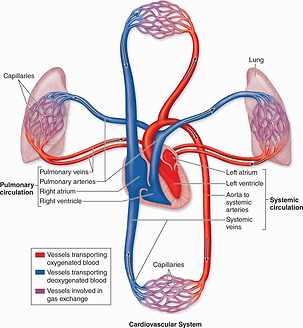
The main components are the heart, blood vessels, and the blood. These simultaneously work together to keep the rest of the body functioning at an efficient rate.




The Foundation
Heart:
The heart is a muscle consisting of four chambers as well as an electrical system to ensure proper contraction and blood flow. The organ consists of two atria, two ventricles, valves, septum, and the walls. The atria are the upper chambers which receive blood. The right atrium receives deoxygenated blood from the body through the superior and inferior vena cava. The left atrium is given oxygenated blood from the lungs through pulmonary veins. The ventricles pump blood out of the heart to be oxygenated or to the rest of the body. The right ventricle pumps deoxygenated blood to the lungs through the pulmonary artery and the left with the aorta pumps oxygenated blood to the entire body. In addition to these chambers, valves are used to prevent backflow of blood. The tricuspid valve is between the right atrium and ventricle while the mitral is between the left atrium and ventricle. The pulmonary and aortic valves are between the right ventricle and pulmonary artery and the left ventricle and aorta respectively. And to divide the entire heart the septum, made from cartilage and bone, separates the left and right side. Since the heart is a muscle how does it contract? A specialized tissue only found in the heart called myocardium is used for the heart's pumping action. They rely heavily on their mitochondria and oxidative phosphorylation to constantly contract involuntarily.
Finally, the electrical system in the heart. The electrical system is made of two nodes and a bundle of fibers to carry electrical impulses. The sinoatrial node is the natural pacemaker located at the right atrium. It sends electrical signals to initiate a heartbeat. The atrioventricular node is between the atria and ventricles which delays impulses and allows ventricles to fill up with blood before they contract. The fibers put this all together to carry signals and ensure synchronization.
Blood vessels:
The three types of blood vessels are the arteries, veins, and capillaries. Arteries are thick walled vessels that can withstand high blood pressure and carry oxygenated blood to capillaries. The largest of the arteries is the aorta which comes directly from the left ventricle. Capillaries are the thinnest of all the blood vessels and arterioles control the flow of blood from arteries into the capillaries through constricting and dilating. The capillaries utilize diffusion to pass nutrients and oxygen to tissues. In addition, they can pass deoxygenated blood back to the heart. Venules are small blood vessels that collect deoxygenated blood back to larger veins. Veins have thinner walls and one way valves to prevent backflow. The pressure in veins is much lower as they pass the blood back to the heart. These are all necessary for the measurement of blood pressure that is heavily utilized in clinical settings. Blood pressure is measured in mmHg and is the critical component in assessing cardiovascular health. There are two numbers involved in blood pressure. The top is systolic and the bottom is diastolic. The systolic is the pressure of the arteries when the heart is contracting while the diastolic is the pressure when the heart is at rest or in between beats. A regular heartbeat is less than 120/80 and hypertension is usually over 140 and 80. Maintaining a healthy blood pressure can be done through regular exercise, limited salt intake, and avoiding smoking.
Blood:
Blood is a complex fluid that plays a great role in essential functions in the body. Over half of blood is made up of plasma. 90% of plasma is water while the rest can be nutrients, hormones, or waste. An essential nutrient found in plasma is electrolytes such as potassium and sodium which maintain pH balance and proper nerve and muscle function. In addition, albumin, a protein involved in osmotic pressure of blood, and globulins, a protein involved in antibodies transport are important components found in plasma. Nutrients like glucose and amino acids are also carried in plasma as well as hormones like insulin. Finally, waste like urea are carried to be excreted in the kidneys.
Red blood cells or erythrocytes are disc-like structures which give a large surface area for gas exchange. Hemoglobin is a protein that has four binding sites each containing an iron heme group. It also has two states: relaxed (R) and tense (T). In the R state hemoglobin has a high affinity for oxygen and is favored when oxygen levels are high. In the T state when oxygen levels are low hemoglobin has a low affinity for oxygen. For example, at tissues when oxygen needs to be released the T state is more favorable. Several factors influence the affinity for oxygen such as pH and carbon dioxide as well as temperature and a molecule called 2,3 bisphosphoglycerate. Higher temperature as well as lower pH and higher levels of carbon dioxide all factor into a lower affinity for oxygen. The molecule 2,3 bisphosphoglycerate binds to hemoglobin to stabilize the T state and influence the release of oxygen into tissues. White blood cells or leukocytes, although part of the immune system are transported through the circulatory system. They are utilized for fighting infections and foreign invaders and make up a very small portion of the blood (1%). The five main types of white blood cells are neutrophils, lymphocytes, monocytes, eosinophils, and basophils. These will all be reviewed in the immune system section.
Thrombocytes or platelets are a small disc shaped cell fragment essential for blood clotting and wound healing. Platelets are necessary to stop bleeding (hemostasis). They are much smaller than other blood cells and have no nucleus. Deriving from shedding megakaryocytes in the bone marrow a hormone thrombopoietin from the liver and kidneys regulates its production. When a blood vessel is injured platelets aggregate and adhere to exposed areas. They release growth factors as well as granules to promote tissue healing and further plate activation.
Cardiovascular Diseases
Hypertension: High blood pressure
-
Force of blood against artery walls is constantly too high
Hypertension can have no symptoms which is why it is referred to as the silent killer. Over time, it can significantly damage organs such as the eyes, heart, and kidneys. In addition, aneurysms, or bulges in blood vessels, can form due to high blood pressure. These eventually rupture and cause life threatening internal bleeding.
Risk factors
-
Excessive salt intake
-
Obesity
-
Little exercise
-
Age
-
Smoking or alcohol consumptions
Treatments can include medications such as ACE inhibitors, calcium channel blockers, and diuretics. Lifestyle changes ahead of time such as low sodium diets and consistent exercise are usually the most effective.
Hypotension: Low blood pressure
-
Blood pressure in arteries is consistently lower
Hypotension is generally less common and less dangerous than hypertension, but insufficient blood flow to organs can lead to serious damage. It can cause dizziness and fainting as well as organ failure. Regular daily activities may be much more difficult as fatigue and weakness will set in.
Risk factors
-
Dehydration
-
Loss of blood
-
Infections
-
Lack of essential vitamins for RBC production
Lifestyle changes such as increased fluid and salt intake can have great effects. Also, small yet frequent meals and avoiding sudden position changes will prevent dizziness or fainting. Medications like dopamine can be used in emergencies to raise blood pressure very quickly.
Coronary Artery Disease
CAD is the most common heart disease. Due to plaque buildup the coronary arteries become narrowed inhibiting the amount of oxygen-rich blood that reaches the heart.
Causes:
The process of plaque buildup is called atherosclerosis in which endothelial damage attracts cholesterol and other fatty substances. This triggers inflammation further narrowing the walls. If the plaque ruptures it will result in blood clots.
Risk factors
-
Age
-
Gender
-
Men are more at risk
-
-
Hypertension
-
High cholesterol (LDL)
-
Obesity
-
Smoking
In early stages there may be no symptoms however later on as blood flow becomes restricted common signs include:
-
Argina (chest pain)
-
Dyspnea (shortness of breath)
-
Heart palpitations
-
Dizziness
Heart attack (myocardial infarction) is one of the risks of CAD. Myocardial infarctions are due to blood flow to the heart muscle being blocked. This can cause damage or death to the heart tissue. Atherosclerosis and plaque rupture are two triggers that can cut off oxygen and nutrients from the heart.
Treatments usually revolve around healthy diets that are low in saturated fats. In addition, quitting smoking, weight, and stress management. Medications such as statins, to lower cholesterol, antiplatelet drugs (aspirin), reduce risk of blood clots, and beta blockers, reduce heart workload, will be used. And in extreme situations surgical methods such as angioplasty (balloon used to open arteries) may have to take place.
Congestive Heart failure
Heart failure occurs if the heart cannot pump blood effectively. This results in fluid backup in several parts of the body. Heart failure usually develops over time. When the heart muscle becomes weak or stiff, whether due to CAD, hypertension, or heart attacks, the organ will not be as effective.
Systolic vs diastolic heart failure
Systolic: Hearts ability to contract is weak leading to a decrease in blood ejected from the left ventricle.
Diastolic: Heart cannot relax properly so it cannot fill properly with blood.
Edema (fluid buildup)
Fluid buildup is a huge risk for heart failure. When the heart cannot circulate blood it will back up in veins. This will pressure the capillaries and leak fluids into surrounding tissues.
Symptoms such as swelling in legs, ankles, feet, and abdomen as well as persistent coughing and wheezing of pink mucus is a clear sign of fluid buildup due to congestive heart failure.
Surgical interventions such as heart valve surgery and left ventricle assist devices are important treatments for CHF. Low sodium diets and weight management can reduce fluid retention.
Stroke
A stroke is an interruption of blood to the brain. This will damage brain cells and result in loss of brain function. The two types are:
Ischemic: A blood clot forming in a blood vessel that leads to the brain. This deprives the brain of oxygen, killing it.
Hemorrhagic: Blood vessels in the brain ruptures and damages brain cells.
Risk factors:
-
Chronic high blood pressure
-
Atrial fibrillation (irregular heartbeat)
-
Atherosclerosis
-
Obesity (diabetes and high cholesterol)
Clears signs of a stroke are:
-
Numbness or weakness in face, arm, or legs
-
Blurred or loss in vision
-
Confusion in speech
-
Severe headache (hemorrhagic)
-
Balance issues
FAST acronym:
-
Face drooping (ask person to smile)
-
Arm weakness (raise hands)
-
Speech difficulties (repeat a sentence)
-
Time (call emergency services)
Treatments:
Ischemic strokes are treated with clot busting medications as well as mechanical thrombectomy. Mechanical thrombectomy is the use of a catheter to physically remove a clot.
Hemorrhagic strokes are treated with surgery to stop bleeding or aneurysms.
Nutrition
Omega-3 Fatty Acids
-
Omega-3s reduce inflammation in blood vessels as well as reduce triglyceride levels
-
Common foods include fatty fish (salmon and sardines), flaxseeds, and walnuts
-
Fiber
-
Fiber lowers LDL cholesterol and supports healthy blood sugar levels
-
Whole grains, beans, fruits, and vegetables contain lots of fiber
-
Potassium
-
Potassium lowers blood pressure and balances sodium levels in the body for proper heart function
-
Bananas, sweet potatoes, and spinach
-
Antioxidants (vitamin C)
-
Antioxidants protect blood vessels from oxidative stress
-
Berries, citrus fruits, dark chocolate
-
Resources
-
National Heart, Lung, and Blood Institute. Stroke - Causes and Risk Factors. National Institutes of Health, 2023, https://www.nhlbi.nih.gov/health/stroke/causes.
-
Mayo Clinic. Heart Disease and Diet. Mayo Foundation for Medical Education and Research, 2024, https://www.mayoclinic.org/diseases-conditions/heart-disease/in-depth/heart-healthy-diet/art-20047702.
-
American Heart Association. Heart-Healthy Diet: 8 Steps to Prevent Heart Disease. American Heart Association, 2025, https://www.heart.org/en/healthy-living/healthy-eating/eat-smart/nutrition-basics/aha-diet-and-lifestyle-recommendations.
-
National Institutes of Health. Stroke and Nutrition: A Review of Studies. PubMed Central, 2013, https://pmc.ncbi.nlm.nih.gov/articles/PMC3678213/.
-
National Institutes of Health. Stroke - Symptoms and Causes. Mayo Clinic, 2024, https://www.mayoclinic.org/diseases-conditions/stroke/symptoms-causes/syc-20350113.
-
National Institutes of Health. Choose Heart-Healthy Foods. National Heart, Lung, and Blood Institute, 2022, https://www.nhlbi.nih.gov/health/heart-healthy-living/healthy-foods.
-
Mayo Clinic. Menus for Heart-Healthy Eating: Cut the Fat and Salt. Mayo Foundation for Medical Education and Research, 2024, https://www.mayoclinic.org/diseases-conditions/heart-disease/in-depth/heart-healthy-diet/art-20046702.
-
National Institutes of Health. Brain Basics: Preventing Stroke. National Institute of Neurological Disorders and Stroke, 2024, https://www.ninds.nih.gov/health-information/public-education/brain-basics/brain-basics-preventing-stroke
-
National Institutes of Health. Stroke and Nutrition: A Review of Studies. PubMed Central, 2013, https://pmc.ncbi.nlm.nih.gov/articles/PMC3678213/.
Images:
-
"Cardiovascular System Overview." Ask The Scientists, USANA Health Sciences,
https://askthescientists.com/cardiovascular-system-overview/. Accessed 8 Aug. 2025 -
"Circulatory System." Basic Medical Key, Elsevier,
https://basicmedicalkey.com/the-circulatory-system-2/. Accessed 8 Aug. 2025. -
"Blood Vessel." Britannica, Encyclopædia Britannica,
https://www.britannica.com/science/blood-vessel. Accessed 8 Aug. 2025. -
"Your Heart & Blood Vessels." Cleveland Clinic,
https://my.clevelandclinic.org/health/body/17057-your-heart--blood-vessels. Accessed 8 Aug. 2025. -
"What Is the Function of Red Blood Cells?" Patient Power,
https://www.patientpower.info/navigating-cancer/what-is-the-function-of-red-blood-cells. Accessed 8 Aug. 2025.


